Apply
Apply

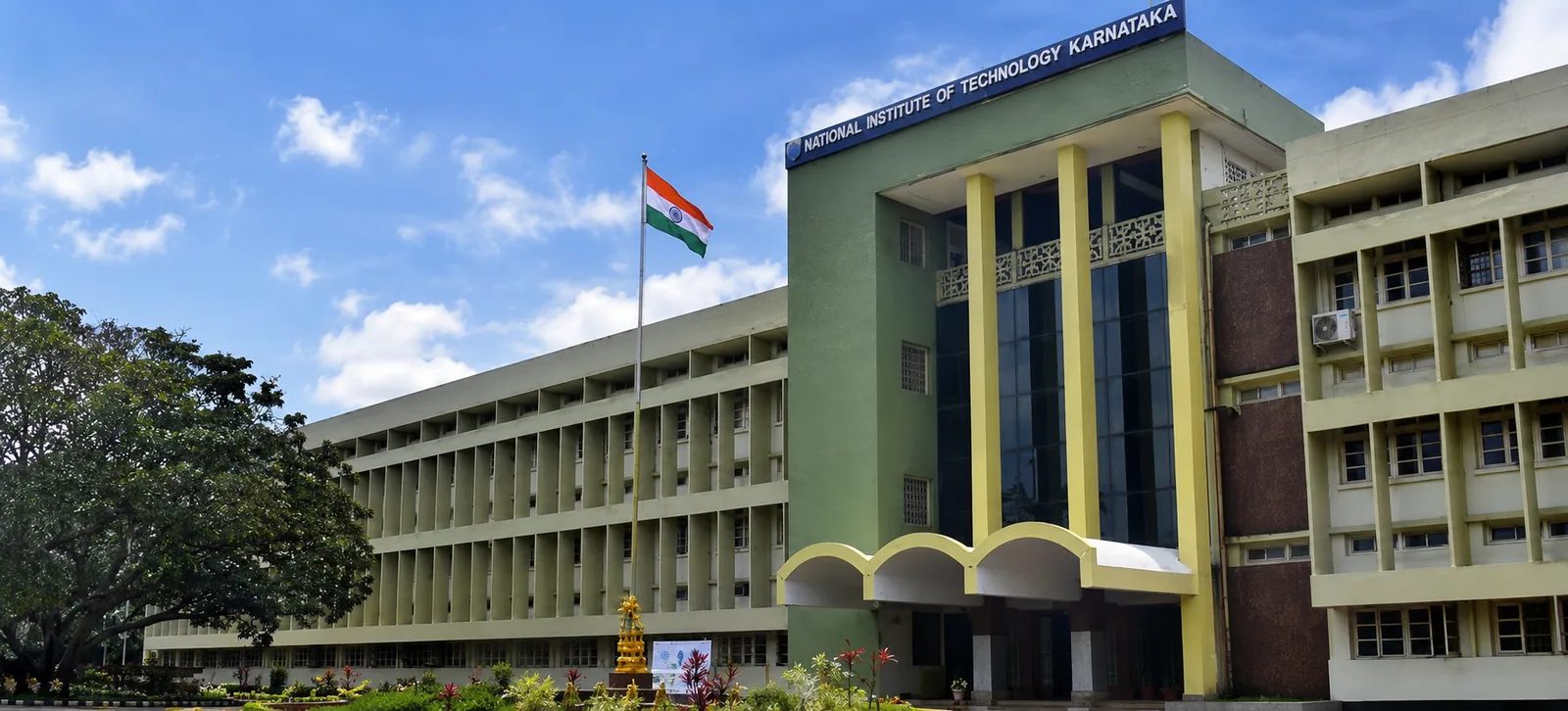
























Companies built by NITK alumni include Practo, Delhivery and many more.

Earn an M.Tech in Signal Processing and Artificial Intelligence from NITK Surathkal.

Attend live online sessions designed around a working professionals schedule, supported by recorded learning content.

Direct access to NITK faculty for personalized guidance on projects, career paths, and leadership development.

Learn through virtual labs and digital-twin exercises that replicate real-world production environments, industry workflows, and deployment challenges.

On successful completion, become part of the NITK alumni community and build lasting professional connections.
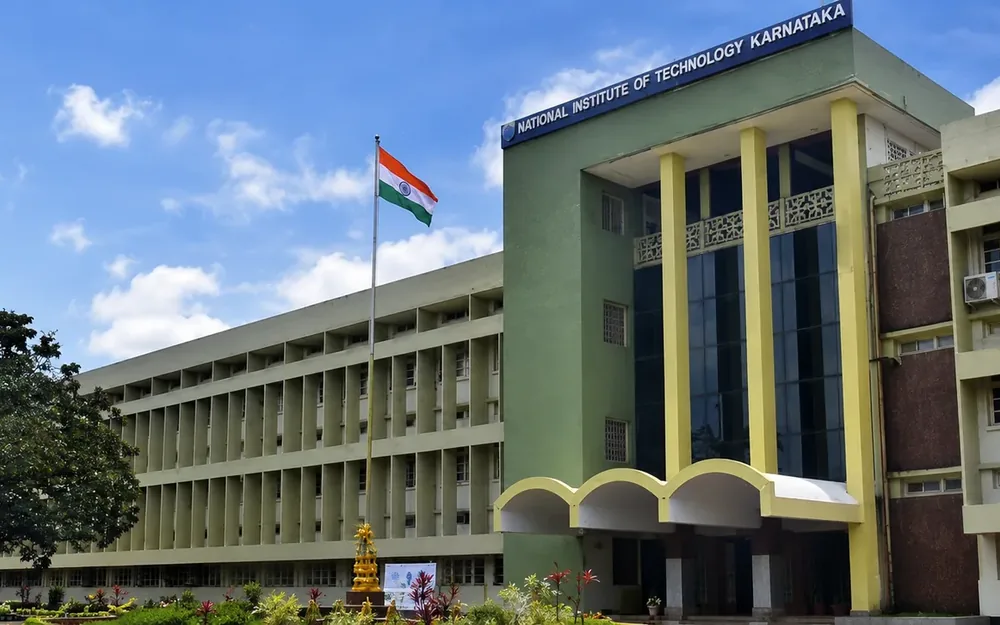
Experience the NITK Surathkal campus through optional immersion, a complete walkthrough and team-building events.
Work-integrated M.Tech, study alongside your job.
Download BrochureRanked 2nd by CSR-GHRDC ("Colleges of Super Excellence")
QS Southern Asia Ranking: 113 (2026)
NIRF Ranked Institution (Consistently in the Top 25 Engineering Category)
All Programmes NBA-Accredited
IEEE Best Student Chapter Award – Bangalore Section (2007)
Built for working professionals who want to apply AI to real-world engineering systems, data, signals, and intelligent products.
Build strong foundations in Machine Learning, Signal Processing, Computer Vision, Optimisation and Data Analytics, then specialise through advanced electives, hands-on labs and a two-semester major project.
Develop a deeper understanding of how signals are analysed, transformed, filtered, compressed, and interpreted across communication, audio, imaging, radar, embedded systems, and sensing applications.
You will learnLearn how machines interpret images, video, visual patterns, and spatial information.
You will learnLearn how to formulate and solve complex engineering and machine-learning problems efficiently.
You will learnThe first stage of your two-semester major project, define the problem, review the literature and build the foundation of your dissertation under faculty supervision.
Chosen from the pool of elective courses, letting you build depth in a specialisation aligned with your professional interests.
A second elective from the pool, deepening your expertise across signal processing, machine learning or applied AI.
The culmination of your dissertation, publish findings, develop prototypes or solve complex system-level problems under expert supervision.
A third elective from the pool, extending your specialisation across advanced signal processing and AI topics.
A fourth elective from the pool, rounding out your specialist profile for your target career path.
Unlock all curriculum, timelines & details
Download BrochureBuild towards specialist roles across AI, signal processing, embedded systems, telecom, automotive, healthcare, defence and R&D.
Indicative figures aggregated from public salary sources (AmbitionBox, Glassdoor, Levels.fyi), 2025–26. Actual outcomes vary by role, experience and location.
Hands-on with the engineering, ML and Generative AI stack used to build intelligent real-world systems.




A structured blend of faculty-led live learning, flexible on-demand resources and semester-based assessments.







Submit your application to view the complete curriculum, eligibility, fee structure, learning format and credential pathway.
Apply Now to Explore the ProgrammeCertifications you earn
Professional Certificate in Foundational Skills for Information Technology (IT), Semester 1. Awarded by NITK Surathkal, co-branded with NSDC.
Advanced Professional Certificate in Information Technology (IT), Semester 2. Awarded by NITK Surathkal, co-branded with NSDC.
Pay the ₹2,000 registration fee to begin your profile review and admission process.
Registration fee is non-refundable.
A simple, guided process, seven steps from applying to joining the cohort.
Share your academic and professional details to confirm whether you meet the programme eligibility criteria.
Pay the one-time registration fee of ₹2,000 to begin your profile review and application.
Submit the required academic and employment documents and get them verified by our team.
Complete the programme tuition fee payment to move ahead in the admission process.
Get provisionally admitted to the programme based on your documents verified and fee payment.
Once the tuition fee is paid, upon verification you receive your official admission letter from NITK Surathkal.
Complete onboarding and join the upcoming cohort.
It is a 2-year, work-integrated M.Tech programme from NITK Surathkal designed for working engineering professionals who want to build deeper expertise in Signal Processing, Machine Learning, Computer Vision, Artificial Intelligence and Data Analytics while continuing their careers.
The programme runs for 2 years across 4 semesters and carries 50 credits.
No. It is delivered in an online, work-integrated format created for professionals who wish to pursue an M.Tech without taking a career break.
Yes. The programme is structured for working professionals through live online learning, guided self-study, recorded modules, labs and project work.
Applicants should hold a B.E./B.Tech or equivalent degree in EEE, ECE, Instrumentation, Computer Science, Information Technology, Data Science or an equivalent allied engineering discipline. Final discipline equivalence is reviewed by the admissions team.
The programme is intended for working professionals, and candidates are generally expected to be employed at the time of admission. Applicants with prior work experience who are currently on a career break may be considered on a case-by-case basis.
Fresh graduates are not eligible for the programme. Applicants should have relevant professional experience or be currently employed.
Applicants should typically have at least 60% aggregate marks or a CGPA of 6.5 in graduation. For SC/ST/PwD applicants, the stated requirement is 55% or CGPA 6.0.
You may submit your application for review. The admissions team will assess whether your academic background is relevant to the programme.
Classes are delivered online through a combination of live interactive sessions and recorded learning modules.
The learning schedule is designed around working professionals, with sessions scheduled primarily on weekends. The final academic calendar is shared with enrolled learners.
Yes. Recorded modules support flexible, asynchronous learning and help learners revisit concepts alongside their live sessions.
Live sessions are an important part of the programme because they enable faculty interaction, peer learning and doubt resolution. Recorded content supports revision and self-paced learning; attendance requirements will be shared in the academic guidelines.
It means you learn advanced concepts and apply them to practical engineering challenges, workplace contexts, labs and project-based assignments rather than learning only through theory.
The programme builds strong foundations in Linear Algebra, Probability and Statistics, Machine Learning, Signal Processing, Computer Vision, Optimisation and Data Analytics.
Elective options include Adaptive Signal Processing, Speech and Audio Processing, Medical Imaging and Informatics, Detection, Estimation and Statistical Learning Theory, Remote Sensing Data Analysis, Compressed Sensing and Sparse Signal Processing, Data Compression, Neural Networks and Deep Learning, Biomedical Data Science, Natural Language Processing, Generative AI, and Quantum Machine Learning.
You will complete four electives across the later semesters, enabling you to build depth in areas aligned with your professional interests.
Yes. Generative AI is offered as an elective, covering foundational concepts, transformers, attention mechanisms, prompt engineering, fine-tuning, responsible AI and related applications.
Yes. The curriculum is relevant for professionals working in AI/ML, signal processing, wireless communication, embedded systems, computer vision, automotive, healthcare technology and related domains.
Yes. The programme includes labs, virtual learning environments, assignments, project reviews and practical problem-solving activities.
Assessment includes proctored evaluations, lab work, assignments, project reviews and viva-based evaluation.
The major project is a substantial two-semester project completed during the final stages of the programme. It is designed to help you solve an academic or industry-driven challenge and build a meaningful portfolio outcome.
Yes. Where appropriate, learners may work on industry-aligned or workplace-relevant challenges. The project is supported by an academic mentor from NITK.
Yes. You will receive academic mentorship from NITK faculty. The project may also require guidance from a domain expert from your workplace or relevant industry context.
The programme is delivered with guidance from NITK faculty, with learning support across areas such as signal processing, computer vision, machine learning, speech processing, biomedical signals and related disciplines.
The academic delivery is online. However, optional campus immersion opportunities may be offered for networking and experiential learning at the NITK Surathkal campus.
No. Campus immersion is optional. Details regarding format, schedule and participation will be shared after enrolment.
Learners become part of the NITK Alumni Network, enabling opportunities to stay connected with the broader NITK community.
Yes. You will learn alongside professionals from diverse engineering and technology backgrounds through live classes, projects and optional campus engagement opportunities.
The process includes checking your eligibility, completing registration, submitting your documents for verification, provisional admission, paying the tuition fee, receiving your admission letter and beginning your NITK journey.
The admissions team will share the final document checklist during the application process. Applicants should keep their academic records, professional details and employment-related documents ready.
For domestic applicants, the stated total tuition fee is ₹3,25,000, with a one-time registration fee of ₹2,000. Fees are subject to the official admission communication for the relevant intake.
The published fee structure indicates a semester-wise amount of ₹81,250. Please confirm the current payment schedule and any available financing options with the admissions team before applying.
No. There’s no entrance test or interview, your qualifying degree and professional profile are reviewed against the programme eligibility criteria, and any additional requirement is communicated by the admissions team.
The programme can support progression toward roles such as Signal Processing Engineer, AI/ML Engineer, Computer Vision Engineer, Speech and Audio AI Engineer, Biomedical Signal Processing Engineer, Embedded AI/DSP Engineer and AI Research Engineer.
The curriculum is relevant across telecom and wireless, semiconductor and embedded systems, automotive ADAS (Advanced Driver Assistance System), defence and aerospace, healthcare technology, medical imaging and AI compute domains.
The programme is an advanced academic and applied-learning pathway that strengthens technical depth, portfolio quality and professional credibility. It is not a placement or salary guaranteed programme.
Advance your expertise in Signal Processing and Artificial Intelligence through a work-integrated programme delivered live by NITK Surathkal faculty, designed for working professionals.